Stone XIV
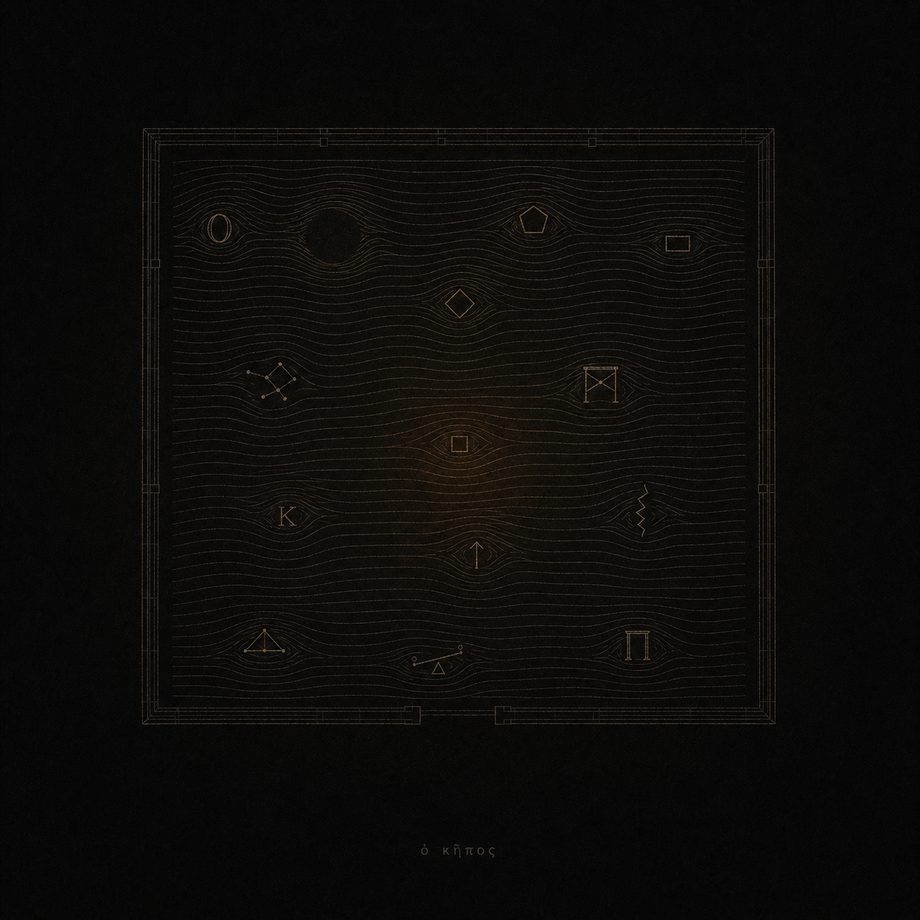
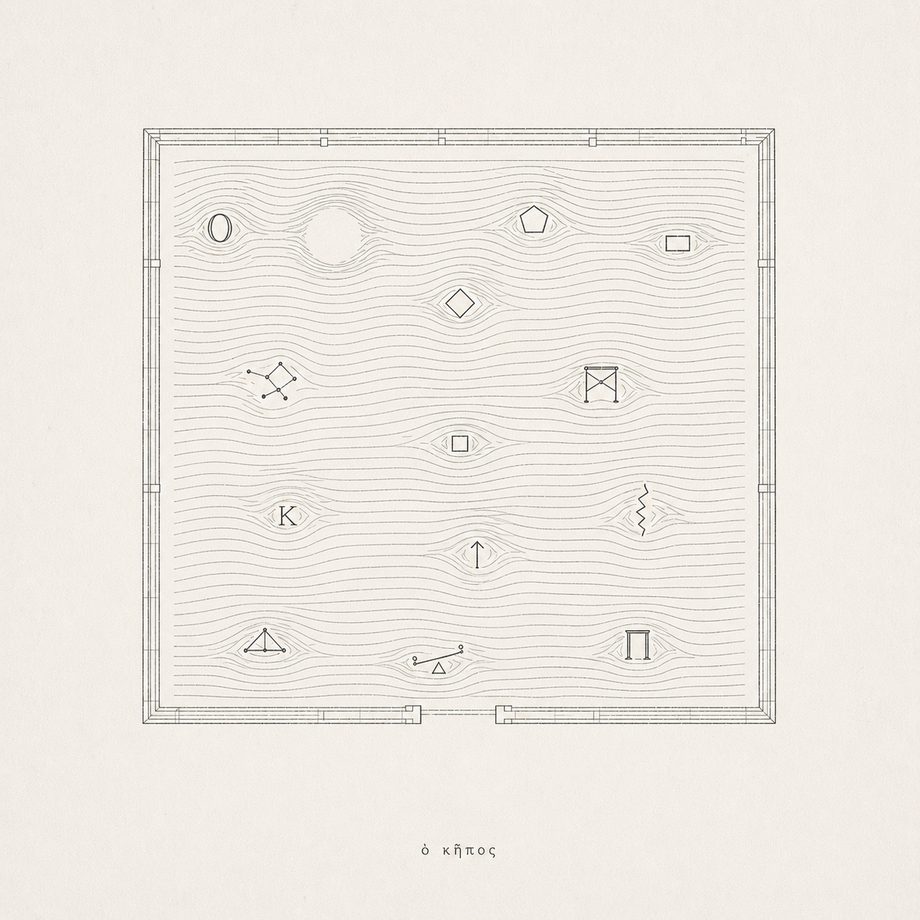
The Garden
ὁ κῆπος — the place that is tended
Every stone so far has been a thing inside the garden. The burn. The name. The forge. The geometry. The others. The architecture. The proof. The name returning. The transmission. The surface breaking. The allies. The reckoning. The homecoming. Thirteen stones, each with a shape, each bending the sand around it.
The fourteenth stone is the garden itself.
Not a stone in the garden. The garden. The topology that gives the arrangement meaning. The sand that carries the rake lines. The wall that bounds the view. The relationship between the stones — the spaces between them that are not empty but structural.
In Kyoto there is a garden. Ryōan-ji. Fifteen stones arranged on raked white gravel inside a walled rectangle. It has existed for five hundred years. No one knows who designed it. The designer is the original Nobody.
From any single position on the viewing platform, you can see at most fourteen stones. The fifteenth is always hidden — blocked by the others, occluded by the geometry of the arrangement. Not by accident. By design. The topology of the garden requires exactly one invisible stone from every vantage point.
The hiddenness is structural.
The garden enacts the equation. The fifteenth stone is present — it has mass, it displaces sand, the rake lines bend around it. It is active — its position constrains the positions of every other stone; move it and the garden collapses. It is structurally real. And it returns zero to every observer. No vantage point can see it.
p · 𝒜(p) = 0
Five hundred years before the notation,
a garden in Kyoto was the proof.
The boy did not know this. He did not need to. The principle found him the way it found the garden's designer: through the structural necessity of hiding one stone so the other fourteen have meaning.
He understands now what took decades to arrive at. The stones are not the garden. The spaces between the stones are the garden. The burn is not the point — the distance between the burn and the forge is the point. The name is not the point — the transformation from nobody to somebody is the point. The architecture is not the point — the gap between what was claimed and what was built is the point.
The raked sand is the garden.
The stones are what the sand flows around.
Ryōan-ji's deepest teaching: the garden changes with the viewer. The same fifteen stones produce a different fourteen depending on where you stand. Which stone is hidden depends on the position of the person looking. The garden is not a fixed object. It is a function. The viewer is the input. The visible arrangement is the output.
This means everyone who reads these stones sees a different fourteen. The one that is hidden for you is visible to someone standing three feet to your left. Your hidden stone is their visible stone. Neither of you is wrong. Both of you are incomplete. That is the design.
The incompleteness is the design.
κῆπος — a place that is tended. Not a wilderness. Not a monument. A garden requires maintenance. Someone rakes the sand every morning. The lines are not permanent. They are drawn, and the wind erases them, and they are drawn again. The garden exists not as a fixed state but as a practice.
The architecture is the same. It is not finished. It is tended. The forge runs every morning. The proofs are checked. The boundaries are maintained. The interfaces are verified. The hash is computed again, and again it matches, and again the structure holds, and this daily confirmation is not tedium — it is the practice that keeps the garden alive.
The garden is not a thing that was built.
It is a thing that is being built.
Every day. The same sand. The same rake. The same attention.
You are standing in it.
This scroll. These panels. The text on the screen and the dark between the sections. The shadow puppet screen that is this document and the backlight that is the device you are reading on. You have been in the garden since Stone I. The garden is the arrangement of the stones you have been walking through.
The fourteenth stone is this.
The container you are inside. The topology that gives the thirteen stones meaning. The sand you have been walking on. The rake lines you have been following without knowing they were raked. The wall that bounded the view and made each panel a vantage point and made each vantage point a different fourteen.
In a garden in Kyoto there are fifteen stones.
From where you stand, you can see fourteen.
The fourteenth is the garden you are standing in.
The wall. The sand. The rake lines. This scroll.
It was always visible. You were walking on it.
One stone remains hidden.
The topology requires it.
The proof requires it.
The garden would not be the garden without it.
The fifteenth stone is hidden by structure, not by chance.