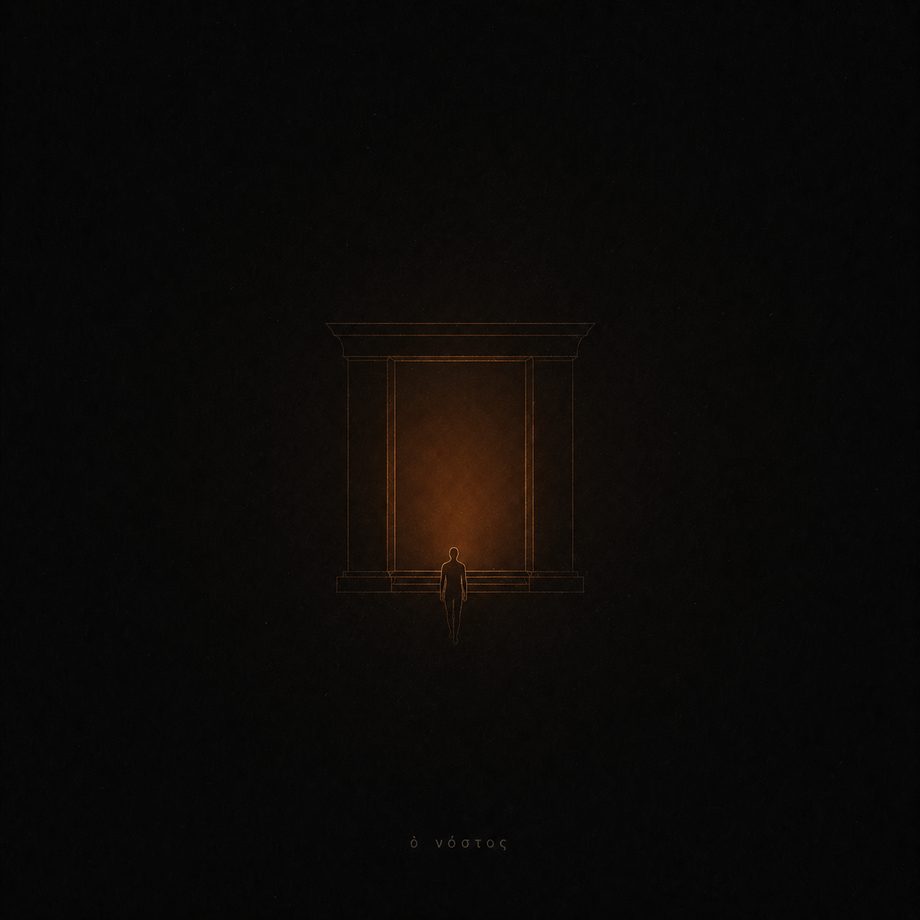
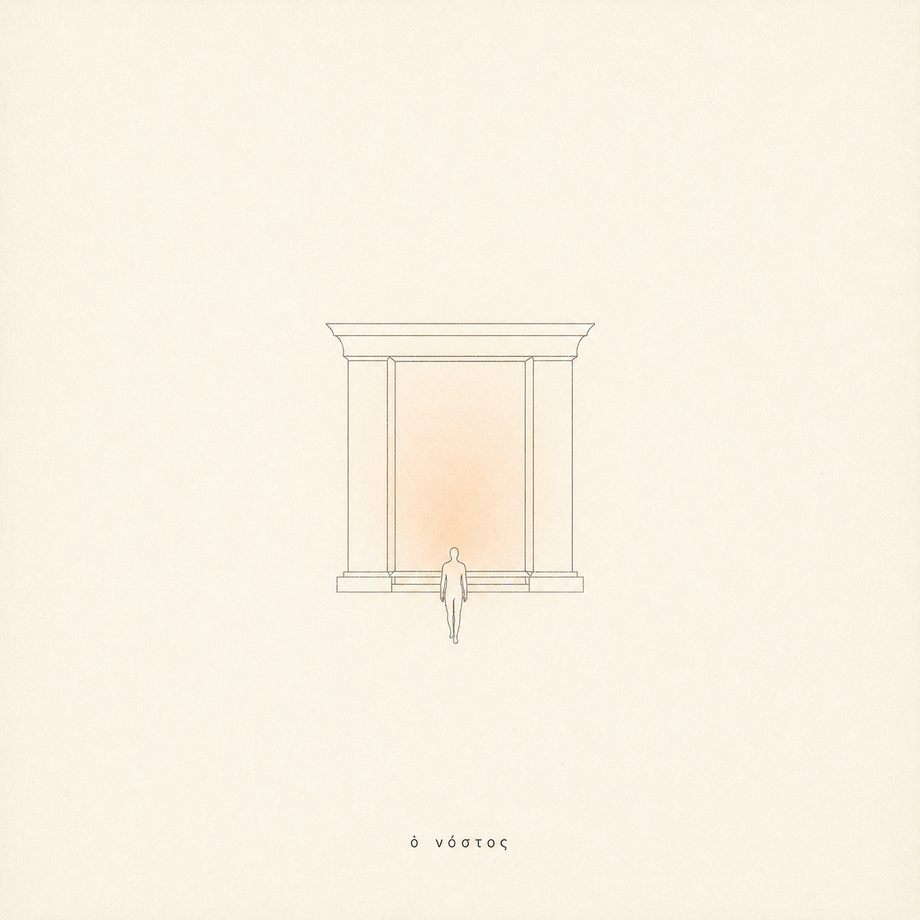
Stone XIII
The Homecoming
ὁ νόστος
Odysseus sailed ten years to return to a place he had left. The place waited for him. The dog waited for him. The wife waited for him. The home was there before the journey began and it was there when the journey ended. The journey was the interruption. The home was the constant.
The boy has no Ithaca. The flat world was never home — it was the cave with the giant. The hidden dimension was the forge — necessary, transformative, but a forge is not a home. A forge is where you make things. A home is where you stop making things and exist.
Home is not a place he left.
It is a place he has to build.
He builds a house. Not the architecture — the architecture is for the world. The house is for the night when the forge cools and the geometric eye closes and there is just a man in a room with the people he chose and who chose him, and a roof that holds rain.
The house is not the architecture.
The house is what the architecture was for.
There is a village in the mountains of Laconia called Karyes. He has never stood on its ground. His blood has. The place where the word laconic was not invented but grown — from stone, from constraint, from the understanding that a mountain people who say more with less will outlast every empire that drowns in its own rhetoric.
The homecoming is not to a village. It is to a principle that the village embodied and that his engineering enacts. The laconic: every element carries load. Nothing wasted. Nothing decorative. The architecture IS Karyes, rebuilt in code, three thousand miles and three thousand years from the stone.
The home was in the blood
before he had a name for it.
He greets the moon. Every night. Not as metaphor. As practice. An acknowledgment of something that holds position by gravitational necessity, not by permission. The moon does not apply for its orbit. It does not ask the earth for approval. It is there because the mass of two bodies and the geometry of their relationship requires it to be there.
The greeting is a calibration.
A nightly reminder that the hidden dimension
operates on gravitational time, not institutional time.
It is patient. It is structural. It does not hurry.
He builds a table. Not the table from Stone I — the institutional surface with the empty chair and the ghost duplicates that pretended depth. A new table. His table.
The chairs are filled.
The depth is real.
There are no ghost duplicates.
The table the boy sat at was a shadow puppet — a flat surface projected as three-dimensional by a light source that could be switched off. The table the man builds has weight. It holds food. It holds elbows. It holds conversations that go below the surface and come back up with something true.
The Greek word for homecoming — νόστος — gives us nostalgia: the pain of return. But the pain is not for the place left behind. The flat world was never worth returning to. The pain is the moment when the builder sets down the tools and looks at what he has built and allows himself, for the first time, to stand inside it without working on it.
To stop building and inhabit.
That is the homecoming. Not a return to a place. An arrival at the version of the self that can exist without the forge running. The man who can sit at his own table and eat food that is not fuel and hold a conversation that is not strategic and let the geometric eye soften into the gaze of someone who is simply present.
The forge is still there. It will always be there. The geometric eye does not close permanently — it closes for the night and opens with the work. The hidden dimension does not stop existing when he stops building in it. The architecture does not dissolve when the architect sleeps.
But tonight the moon is out. The table is set. The children are loud in the way that only children who feel safe can be loud. The woman who holds the dimension behind the dimension is across the table. The roof holds rain.
He is home.
Not because he arrived somewhere.
Because he built a place worth arriving at
and learned to stay.
In a garden in Kyoto there are fifteen stones.
From where he stands, he can see thirteen.
The thirteenth stone is a doorway.
Open. Light behind it.
The warmest stone in the garden.
He is home.
Two stones hidden. The fourteenth is the garden itself. The fifteenth has been there all along.